You were probably more of an expert on Biblical Scripture than I was. It’s only been since Jesus visually entered my prayer in 2013 that I began reading the Bible in earnest. In today’s post you can see everything Jesus and the Apostles experienced during the final week that Jesus was human.
First though, before we begin, let me give you this little excerpt to consider:
The Apostles of Jesus are first-hand witnesses of the many miracles he performed “before” his death by Crucifixion – and they also witnessed Jesus alive again “after” his death. During this time they ate with Jesus, examined the wounds to his body, and received instructions on what they are to do “after he ascends to heaven” (40 days after his Resurrection). Instructions included: waiting for the Holy Spirit to arrive (10 days after his ascension); receiving power when the Holy Spirit arrives upon them, enabling them to speak in multiple languages so they can be witnesses of Jesus for all people (Acts 1:8); then go to the ends of the earth to make disciples of all nations – baptizing them in the name of God the Father, Son, and Holy Spirit – teaching them repentance, forgiveness of sins, and to obey everything Jesus commands. Jesus gave assurance to his Apostles that “he will be always with them, to the very end of the age” (Matthew 28:19-20).
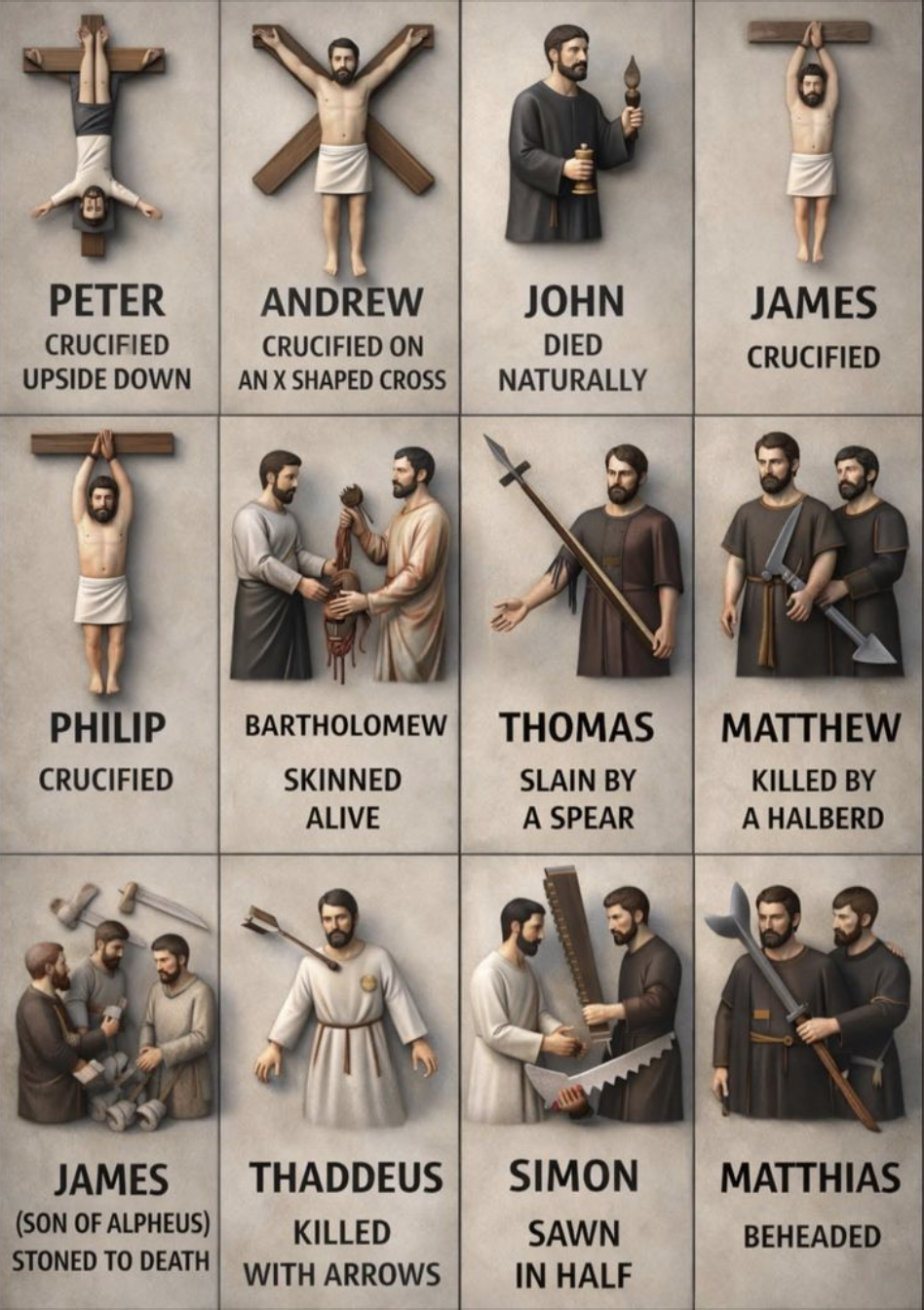
As they traveled in all directions, the Apostles had plenty of success finding followers but they also found plenty of people who were adamantly opposed to their witness of Jesus, calling it a “Lie.” All of the Apostles ended up being tortured for their evangelism, and all but one died from the torture. We provide details of what happened to each Apostle at the conclusion of this post.
Even today, there are people who deny Jesus and say his Resurrection is a lie. Speaking directly to them – let me ask you this: How many groups of people do you know – would willingly endure brutal torture and death “for a Lie?” Torture that ranged from Boiling in Hot Oil, Stoning, and Beheading – to having their Skin Removed by Flaying, Cut in Half by a Saw, and Crucifixion. Who would be willing to go through any of that – if it were just a Lie?
Let’s move forward with All the Major Events of Holy Week leading up to Resurrection Sunday.
Day 1 – Palm Sunday
Day 2 – Monday Jesus Clears the Temple
Day 3 – Tuesday in Jerusalem at Mount of Olives
Day 4 – Silent Wednesday
Day 5 – Maundy and Last Supper Thursday
Day 6 – Good Friday’s Trial, Crucifixion, Death, and Burial
Day 7 – Saturday in the Tomb
Day 8 – Resurrection Sunday
Holy Week – Day 1 – Palm Sunday – Jesus enters Jerusalem
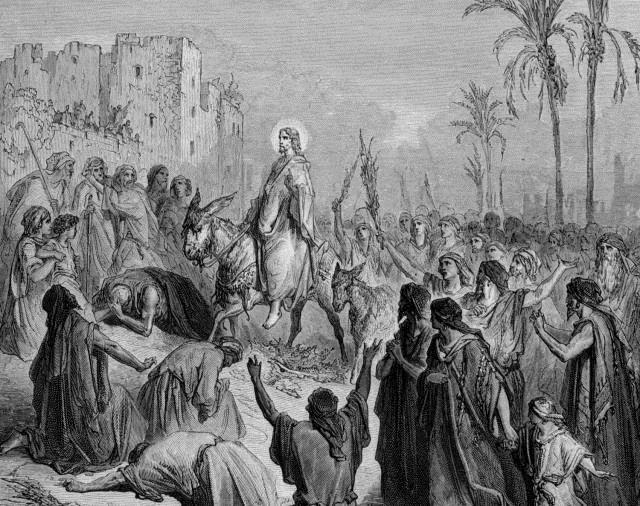
On the Sunday before his death, Jesus began his trip to Jerusalem, knowing that soon he would lay down his life for the sins of the world. Nearing the village of Bethphage, he sent two of his disciples ahead to look for a donkey with its unbroken colt. Jesus instructed the disciples to untie the animals and bring them to him.
Then Jesus sat on the young donkey and slowly, humbly, entered into Jerusalem. Crowds welcomed him by waving palm branches in the air and shouting “Blessed is he who comes in the name of the Lord!”
On Palm Sunday, Jesus and his disciples spent the night in Bethany which is a town about two miles east of Jerusalem. In all likelihood, Jesus stayed in the home of Mary, Martha, and Lazarus, whom Jesus had raised from the dead.
Holy Week – Day 2 – Monday – Jesus Clears the Temple
It is now the day after Palm Sunday as we continue tracing the footsteps of Jesus. He is returning with his disciples to Jerusalem. Along the way, Jesus curses a fig tree because it had failed to bear fruit. Some scholars believe this cursing of the fig tree represents God’s judgment on the spiritually dead religious leaders of Israel. Others believe the symbolism extended to all believers, demonstrating that genuine, living faith, is more than just outward religiosity.
True faith bears spiritual fruit in a person’s life.
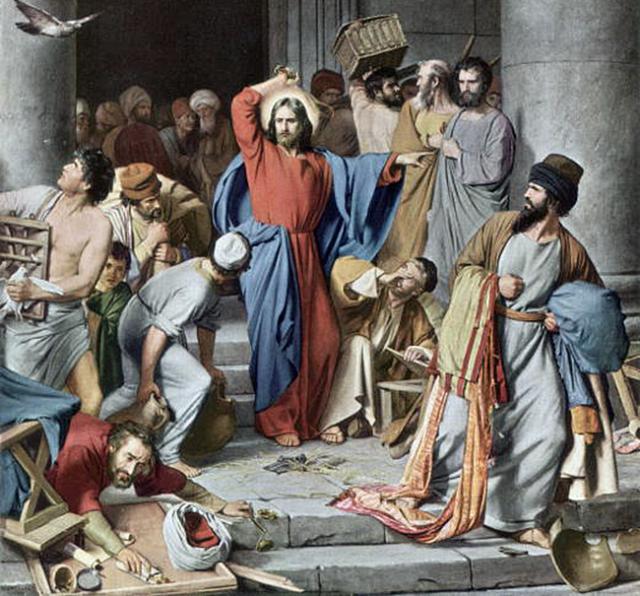
When Jesus arrived at the Temple he found the courts full of corrupt money changers, who were buying and selling goods in the open market. He began overturning their tables and clearing the Temple, saying “The Scriptures declare, ‘My Temple will be a house of prayer’ but you have turned it into a den of thieves’.” (Luke 19:46)
That evening Jesus stayed in Bethany again, probably in the home of his friends, Mary, Martha, and Lazarus.
Holy Week – Day 3 – Tuesday in Jerusalem at Mount of Olives
It is now Tuesday morning and our journey with Jesus through Holy Week takes us back with his disciples to the Temple in Jerusalem. Along the way, they passed the withered fig tree and Jesus taught them about faith using the fig tree as an analogy.
Once at the Temple, religious leaders aggressively challenged the authority of Jesus, attempting to ambush him and create an opportunity for his arrest.
But Jesus evaded their traps and pronounced harsh judgment on them, saying: “Blind guides! You are like whitewashed tombs – beautiful on the outside but filled on the inside with dead people’s bones and all sorts of impurity. Outwardly you are like righteous people, but inwardly your hearts are filled with hypocrisy and lawlessness. Snakes! Sons of vipers! How will you escape the judgment of hell? (Mathew 23:24-33)
Scripture indicates that Tuesday of Holy Week was the day Judas Iscariot negotiated with the Sanhedrin to betray Jesus (Matthew 26: 14-16).
After a tiring day of confrontation and warnings about the future, once again, Jesus and the disciples stayed the night in Bethany.

Holy Week – Day 4 – Silent Wednesday
The Bible doesn’t say what our Lord did on Wednesday of Holy Week, also referred to as Passion Week. Scholars speculate that after two exhausting days in Jerusalem, Jesus and his disciples spent this day resting in Bethany in anticipation of Passover.
Bethany was about two miles east of Jerusalem. Here Lazarus and his two sisters, Mary and Martha, lived. They were close friends of Jesus, and probably hosted him and his disciples during these final days in Jerusalem.
Just a short time previously, Jesus had revealed to the disciples, and the world, that he had power over death by raising Lazarus from the grave. After seeing this incredible miracle, many people in Bethany believed that Jesus was the Son of God and put their faith in him. Also in Bethany just a few nights earlier, Lazarus’ sister Mary had lovingly anointed the feet of Jesus with expensive perfume.
While we can only speculate, it’s fascinating to consider how our Lord Jesus spent this final quiet day with his dearest friends and followers.
Holy Week – Day 5 – Thursday’s Passover, Last Supper
Our tour through Holy Week takes a somber turn on Thursday.
From Bethany, Jesus sent Peter and John ahead to the Upper Room in Jerusalem to make the preparations for the Passover Feast. That evening after sunset, Jesus washed the feet of his disciples as they prepared to share in the Passover. By performing this humble act of service, Jesus demonstrated by example how they were to love one another. Today, many churches practice foot-washing ceremonies as part of their Maundy Thursday services.
Then Jesus shared the feast of Passover with his disciples saying, “I have been very eager to eat this Passover meal with you before my suffering begins. For I tell you now that I won’t eat this meal again until its meaning is fulfilled in the Kingdom of God.” (Luke 22:15-16, NLT)
As the Lamb of God, Jesus was about to fulfill the meaning of the Passover by giving his body to be broken and his blood to be shed in sacrifice, freeing us from sin and death. During this Last Supper, Jesus established the Lord’s Supper, or Communion, instructing his followers to continually remember his sacrifice by sharing in the elements of bread and wine:
“And he took bread, and when he had given thanks, he broke it and gave it to them, saying ‘This is my body, which is given for you. Do this in remembrance of me.’ And likewise the cup after they had eaten, saying, ‘This cup that is poured out for you is the new covenant in my blood.’” (Luke 22: 19-20, ESV)
Later, Jesus and the disciples left the Upper Room and went to the Garden of Gethsemane, where Jesus prayed in agony to God the Father. Luke’s Gospel says “his sweat became like great drops of blood falling down to the ground.” (Luke 22:44, ESV)
Late that evening in Gethsemane, Jesus was betrayed with a kiss by Judas Iscariot and arrested by the Sanhedrin. He was taken to the home of Caiaphas, the High Priest, where the whole council had gathered to begin making their case against Jesus.
Meanwhile, in the early morning hours as Jesus’ trial was getting underway, Peter denied knowing him three times.

Holy Week – Day 6 – Good Friday’s Trial, Crucifixion, Death, Burial
Good Friday is the most difficult day of all for Jesus during this week which has come to be known as Holy Week, and Passion Week. Christ’s journey turned treacherous and painful in these final hours leading to his death.
According to Scripture, Judas Iscariot, the disciple who had betrayed Jesus, was overcome with remorse and hanged himself early Friday morning.
Meanwhile, before the “third hour” (9:00 am), Jesus endured the shame of false accusations, condemnation, mockery, beatings, and abandonment.
After multiple unlawful trials he was sentenced to death by crucifixion, one of the most horrible methods of capital punishment.
Before Christ was led away, soldiers spit on him, tormented and mocked him, and pierced him with a crown of thorns. Then Jesus carried his own cross to Calvary where, again, he was mocked and insulted as Roman soldiers nailed him to a wooden cross.
Jesus spoke seven final statements from the cross, and here is the chronological order in which he said them:
- Father, forgive them, for they know not what they do.
- Truly, I say to you, today you will be with me in paradise.
- Woman, behold your son. Son, behold your mother.
- My God, my God, why have you forsaken me?
- I thirst.
- It is finished.
- Father, into your hands I commit my spirit.
Then, about the ninth hour (3:00 pm), Jesus breathed his last breath and died.
By 6:00 pm Friday evening, Nicodemus and Joseph of Arimathea, took Jesus’s body down from the cross and laid it in a tomb.
Here is some additional information about the seven final statements Jesus made while nailed to the cross:
- “Father, forgive them, for they know not what they do” (Luke 23:34 – Forgiveness). Jesus prayed for forgiveness for those who were crucifying him: the Roman soldiers, and apparently for all others who were involved in his crucifixion.
- “Truly, I say to you, today you will be with me in paradise.” (Luke 23:43 – Salvation). Jesus was crucified between two thieves, one of whom supported the innocence of Jesus and asked him to remember him when he comes into his kingdom. Jesus replies, “Truly, I say to you, today you will be in paradise.”
- “Woman, behold your son. Son, behold your mother.” (John 19:26–27 – Relationship). Jesus saw his own mother, Mary, and a disciple whom he loved, John, standing near her. He said to his mother, “Woman, behold your son”. Then he said to his disciple John, “Behold your mother”. And from that hour, his disciple took Jesus’ mother into his family. Even though Jesus was in horrible pain on the cross, he thought not of himself but was concerned for the well-being of his mother after his death. This shows Jesus’ humanity and the depth of love he had for his mother and the disciple into whose care he entrusted her.”
- “My God, my God, why have you forsaken me?” (Matthew 27:46 & Mark 15:34 – Abandonment). Around the ninth hour, Jesus shouted in a loud voice, saying “Eli Eli lama sabachthani?” which is, “My God, my God, why have you forsaken me?” It is the only saying that appears in more than one Gospel [13] and is a quote from King David in Psalm 22:1. This saying is taken by some as an abandonment of the Son by the Father. Others understand the cry as that of one who was truly human and who felt forsaken. Put to death by his foes, very largely deserted by his friends, he may have felt also deserted by God.[20] Still others point to this as the first words of Psalm 22 and suggest that Jesus was reciting these words, perhaps even the whole psalm, “that he might show himself to be the very Being to whom the words refer; so that the Jewish scribes and people might examine and see the cause why he would not descend from the cross; namely, because this very psalm showed that it was appointed that he should suffer these things.” [21]
- “I thirst.” (John 19:28 – Distress) The Gospel of John says Jesus was offered a drink of sour wine, adding that this person placed a sponge dipped in wine on a hyssop branch and held it to Jesus’ lips. Hyssop branches had figured significantly in the Old Testament and in the Book of Hebrews.[23]
- ”It is finished.” (John 19:30 – Triumph) This is the announcement of the end of Jesus’ earthly life, in anticipation for the Resurrection. [13] Jesus had now completed what he came to do. A plan was fulfilled; a salvation was made possible; a love shown. He had taken our place. He had demonstrated both humanity’s brokenness and God’s love. He had offered himself fully to God as a sacrifice on behalf of humanity.
- “Father, into your hands I commit my spirit.” (Luke 23:46 – Reunion) From Psalm 31:5, this is an announcement of Jesus joining God the Father in Heaven. [13] These last words of Jesus from the cross show his absolute trust in God: ‘Father, into your hands I commit my spirit’. This has been termed a model of prayer for everyone when afraid, sick, or facing one’s own death. It says in effect, “I commit myself to you, O God. In my living and in my dying, in the good times and in the bad, whatever I am and have, I place in your hands for your safekeeping. [4]: p.112

Holy Week – Day 7 – Saturday in the Tomb
The body of Jesus Christ lay in the tomb where it was guarded by Roman soldiers throughout the day on Saturday, which was the Sabbath.
When the Sabbath ended at 6:00 pm, Christ’s body was ceremonially treated for burial with spices purchased by Nicodemus.
“He brought about seventy-five pounds of perfumed ointment made from myrrh and aloes. Following Jewish burial custom, they wrapped Jesus’ body with the spices in long sheets of linen cloth.” (John 19: 39-40, NLT)
Nicodemus, like Joseph of Arimathea, was a member of the Sanhedrin, the court which had condemned Jesus Christ to death. For a time, both men had lived as secret followers of Jesus, afraid to make a public profession of faith because of their prominent positions in the Jewish community.
Similarly, both were deeply affected by Christ’s death. They boldly came out of hiding, risking their reputations and their lives because they realized Jesus was, indeed, the long-awaited Messiah. Together they cared for Jesus’ body and prepared it for burial.
While his physical body lay in the tomb, Jesus Christ paid the penalty for sin by offering a perfect, spotless sacrifice. He conquered death, both spiritually and physically, securing our eternal salvation.
An eternal salvation, which “I” believe (John.Levay@yahoo.com), is ours “only” if we truly believe in our hearts that Jesus did indeed conquer death.
“For you know that God paid a ransom to save us from the empty life we inherited from our ancestors. And the ransom he paid was not mere gold or silver. He paid for us with the precious lifeblood of Jesus Christ, the sinless, spotless Lamb of God.” (1 Peter 1: 18-19, NLT)

Holy Week – Day 8 – Resurrection Sunday!
On Resurrection Sunday we reach the culmination of Holy Week. The Resurrection of Jesus Christ is one of the most important events in the Christian faith. The very foundation of all Christian doctrine hinges on the truth of this event.
Early Sunday morning several women (Mary Magdalene the mother of Jesus, Mary the mother of James, Joanna, and Salome are all mentioned in the Gospel) went to the tomb and discovered that the large stone covering the tomb’s entrance had been rolled away. An angel was at the entrance and announced, “Don’t be afraid! I know you are looking for Jesus, who was crucified. He isn’t here! He is risen from the dead, just as he said would happen” (Matthew 28: 5-6, NLT).
“He is Risen!”
In the Gospel of Matthew 28:6, “He is Risen” signifies that Jesus overcame death, fulfilling prophecy, and offering hope, redemption, and eternal life to those who Believe in Jesus Christ.
“He is Risen Indeed!”
Two of the main contributions that ThereYouAreJesus provides for Christianity are: Documentation of Modern-Day Interactions with God the Father, Son, and Holy Spirit; and Recovering God’s Seven Spirits from the abandonment that began when they were left out of the early version of Christian Creeds. Our purpose is to Restore into Christian doctrine the worthy magnification of all Seven Spirits of God which are the operating system for God’s Holy Spirit of Jesus Christ. Names of God’s Seven Spirits are: Knowledge, Understanding, Wisdom, our Lord Jesus Christ, Counsel, Might, and reverent Fear of our Lord.
My name is John Russell Levay, I am a momentary-death survivor by way of cardiopulmonary resuscitation. During that death my Grandfather, George Russell Quirk, took my “consciousness with vision” to “see God’s Seven Spirits” at the front of God’s Throne. After showing and explaining them to me, George said “If you go back to life, you should tell people about them” because they are far more important to God than people on earth realize.
In compliance with my Grandfather George’s request in 1969, and the reminder of George’s request given to me by Jesus Christ in 2013, I’ve learned a lot about the Seven Spirits. For example, one of the main reasons why they are being excluded from church services today is because they were left out of the “early” creeds centuries ago.
Those early creeds were simply to provide concise summaries of core beliefs such as Christmas, Good Friday, and Resurrection Sunday. They helped spread the news of Christianity amongst a largely illiterate society, but their priority was not in the details. They excluded the complexity and depth of such things as the “seven-fold manifestation of God’s Holy Spirit” even though God’s Seven Spirits are clearly written in the Bible’s Old Testament (BC) Book of Isaiah – and New Testament (AD) Book of Revelation.
This exclusion leaves the Book of Isaiah’s “prophecy” about the Seven Spirits – and John the Apostle’s “visions” of the Seven Spirits in the Book of Revelation – neglected and unexplored – thereby missing out on the realization that the “prophecy” and “visions” are “connected.” Isaiah’s prophecy is like a lens that reaches centuries into the future by foreseeing John the Apostle’s “visions.” The reason this is important is because when the Apostle John sees the Seven Spirits, he is not presenting a new doctrine or an isolated mystical vision to be ignored. Quite the contrary, the Apostle is continuing the revelation that the Prophet began centuries earlier.
This exclusion eventually led to an unintentionally-historic “narrowing” of Christian doctrine, as the more recent and formalized Creeds are based on those earlier, less detailed versions. As a result, today’s Nicene Creed and Apostles’ Creed exclude any mention of the Seven Spirits – which is a contributing factor to why today’s churches are excluding the Seven Spirits of God’s Holy Spirit of Jesus Christ from their worship services, choosing to provide less detail than what God wants for His Holy Spirit.
The way to Repair this deficiency is to Reverse the unintended narrowing of doctrine by Restoring God’s Seven Spirits into the Training required of our fellow humans who want to become ordained religious leaders – including but not limited to Priests, Ministers, Deacons, and Bishops.
Training for Priests includes: Seminary Formation; and Priestly Formation.
Additional Training for Bishops includes: Living Our Vows; Episcopal Formation Program; and Board of Bishops.
I prayerfully ask you to Join this growing movement to Restore God’s Seven Spirits back into Christian doctrine as part of our worthy magnification for God the Father, Son, and Holy Spirit.
There are numerous ways you can help, such as: Telling people about the Seven Spirits by learning and sharing with others; Watching for the number ” 7 ” appearing as part of meaningful coincidences in your everyday life – and writing down what made them a coincidence – just like we do here on ThereYouAreJesus. You can see many documented examples of such evidence in the category titled “Numbers” which includes the “Seven Series.” It is the Relevance, Timing, and Repetition of coincidences that will eventually prove to you that they are actually No Coincidence At All. For example, heaven hears our thoughts and prayers, but we as humans can’t hear theirs. So one way they can respond to our prayers is through actions we can see. These actions, combined with our prayers, are the basis for two-way communications between heaven and earth.
Another important way you can help us restore the Seven Spirits is by asking churches if they include God’s Seven Spirits in their Sermons and Lessons – and if not, why? If you sense they would like more information and teaching resources, we can help! Let them know about our website (ThereYouAreJesus.com), our mission (Restoring the “Seven Spirits of God’s Holy Spirit of Jesus Christ” back into church doctrine for mainstream Christianity,” and that we can help them “Teach” God’s Seven Spirits to their parishioners and congregants.
Please feel free to give them my email, john@ThereYouAreJesus.com, so they can contact me directly.
To help explain the mission of this restoration movement you can give them this link which explains What we are asking, and Why. This links to the information… Restoring the Seven Spirits of God’s Holy Spirit.
Share this with everyone you know, your Church, your Friends, and Social Networks.
Jesus Gives You the ability to do this in the Book of John, Chapter 20, Verse 21 where He says,
“Just as the Father has sent Me, I also send You.”
Thank you so much!
John Levay
John@ThereYouAreJesus.com
I am George’s Messenger for the Seven Spirits of God’s Holy Spirit of Jesus Christ.
As promised at the beginning of this post, here are the details of what happened to each of Jesus’ Apostles:
Simon Peter: Crucified upside down in Rome.
Andrew (Simon Peter’s brother): Crucified on an X-shaped cross in Patras, Greece.
Simon the Zealot: Sawed in half in Persia.
James (Son of Zebedee): Executed by sword (beheaded) in Jerusalem by King Herod.
John: Survived persecution, including being boiled in oil, and died of old age in exile on the island of Patmos
James (Son of Alphaeus): Stoned to death or clubbed to death in Jerusalem.
Jude (Thaddeus): Killed with arrows or an axe.
Matthew: Stabbed to death with a sword in Ethiopia.
Thomas: Speared to death in India.
Philip: Crucified in Phrygia.
Bartholomew (Nathanael): Flayed alive and beheaded in Armenia.
Judas Iscariot: Committed suicide after betraying Jesus.
Matthias (Replaced Judas): Stoned and then beheaded.
Paul: Although not one of the original 12 Apostles, Paul was a Jewish Pharisee who became an Apostle and was beheaded by Nero in Rome.
The commitment of these Apostles to Jesus Christ proves beyond a reasonable doubt that the Crucifixion, Resurrection, Ascension, and Pentecost are True and that Jesus is The Lord and Savior for God who offers You the Truth, the Way, and the Life.